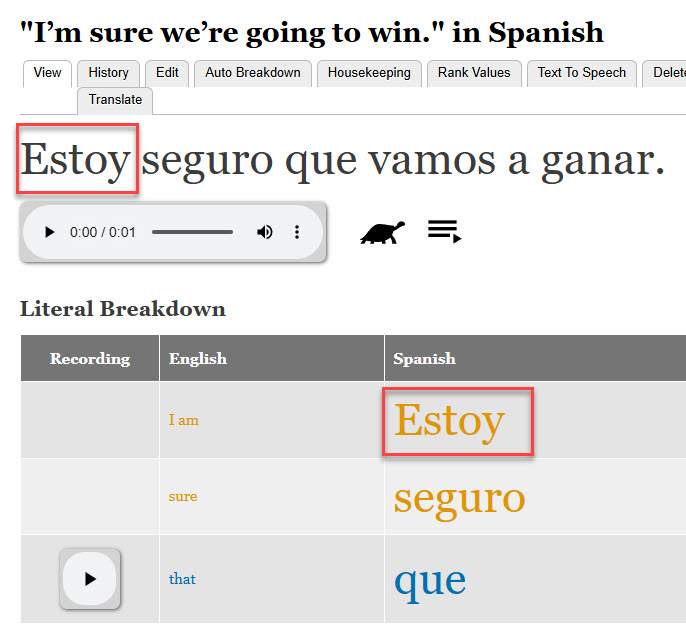
Another mistake which the automatic creation process makes, is that it will create an entry with a capital letter if that word appears at the start of a sentence. For example, it might create an entry for "Another" when "another" should be used.
For example, a new entry "Estoy" was created because the word "Estoy" appears here at the start of the sentence with upper case.
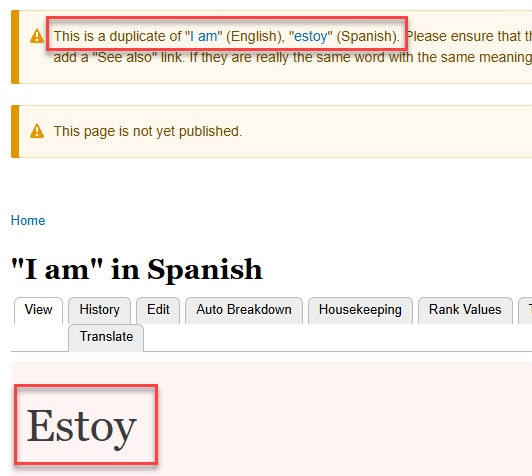
However, it should use the word "estoy". When you click through on the upper-case version Estoy, you see that it points to a duplicate which already exists, "estoy", which correctly begins with a lowercase letter:
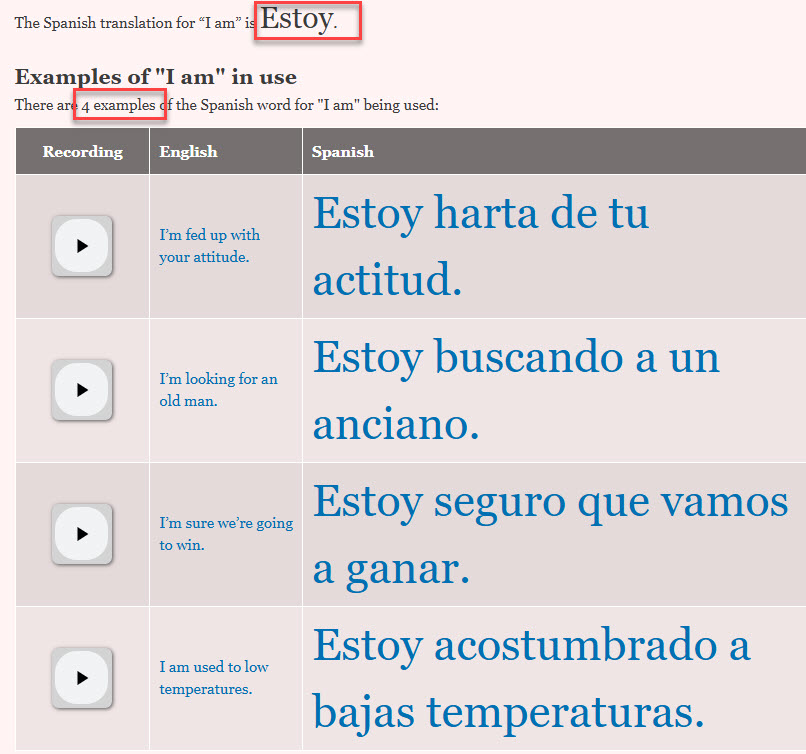
In that case it is necessary to change all the examples which have been created using the uppercase version Estoy, which in this case is 4 examples:
and indeed we can see that there are already 23 examples using "estoy" in lowercase:
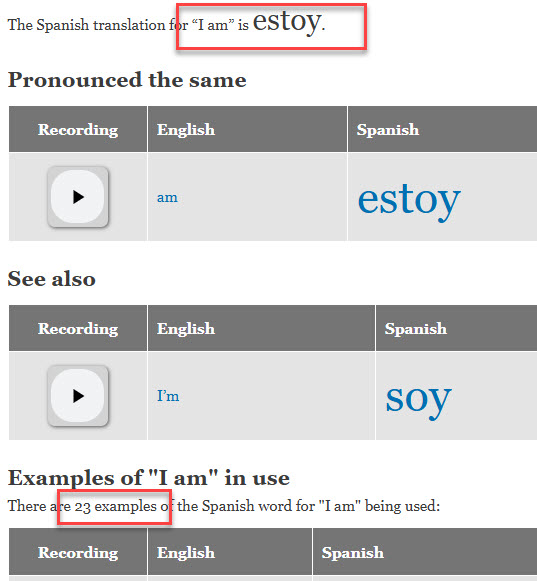
Note too that in many (or even all) of the examples the word may appear with a capital because it starts a sentence. Nonetheless, unless the word is a name like John or London, the entry itself should not start with a capital. For example, even if every sentence is "Estoy this...", "Estoy that...", the entry for the word itself would still be "estoy". Here are some of the examples for the word "estoy":
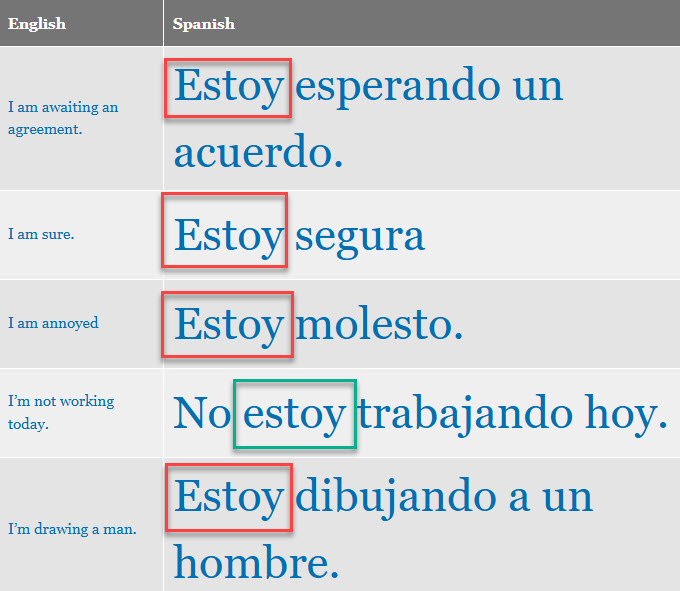
The example sentences do not decide whether a word starts with a capital letter or not. Generally the words will not start with a capital letter, unless they are proper nouns like John or London.
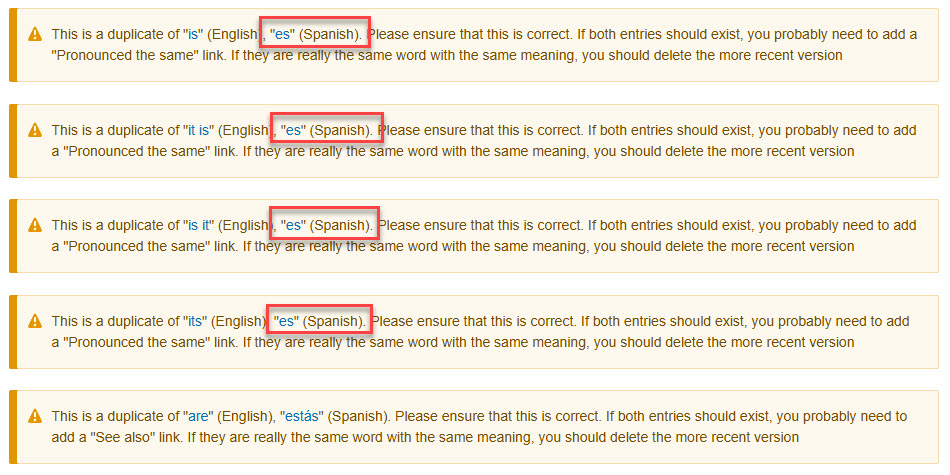
One last thing to be aware of, is that the duplicates warning is case-sensitive. The duplicate warning was earlier matching on the English "I am", and not the Spanish "Estoy". In the example below, the Spanish word "Es" is currently begins with uppercase, and the only duplicate warned about is matching "are" (English).
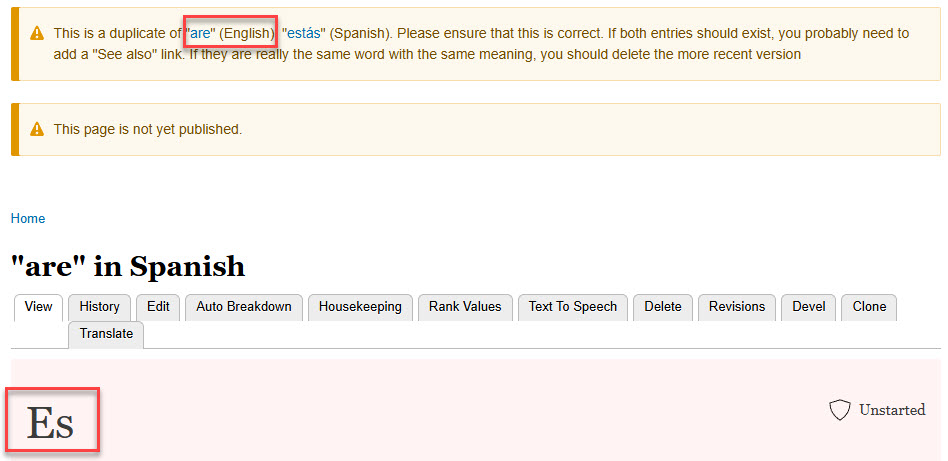
However, if we rename "Es" to be "es", then we will suddenly see all sorts of other duplicate warnings appear: