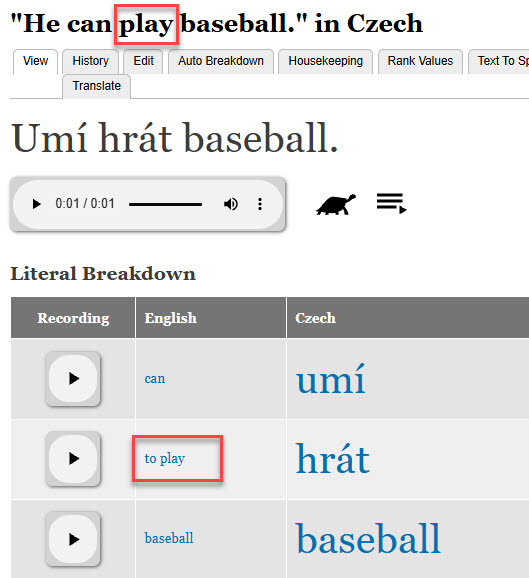
The automatic process handles very inconsistently verb infinitives (e.g. "to play" vs. "play").
Let's consider this in the Czech language.
We see an entry "to play":
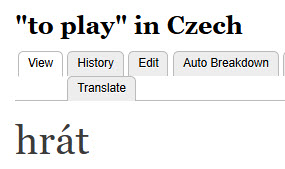
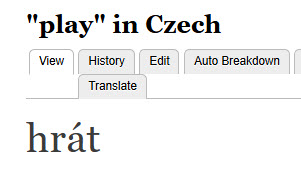
but we see an entry with the identical Czech, and since this the identical entry is an infinitive ("to play"), then we should investigate further:
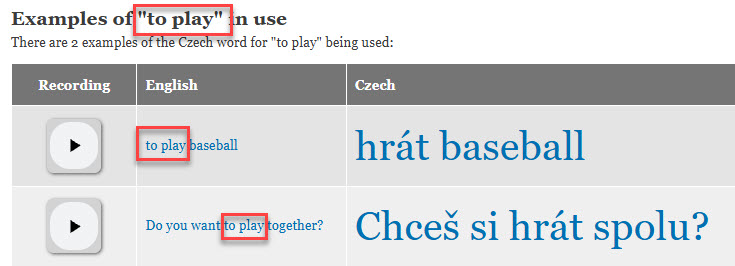
The examples of "to play" have the English with "to play" in them:
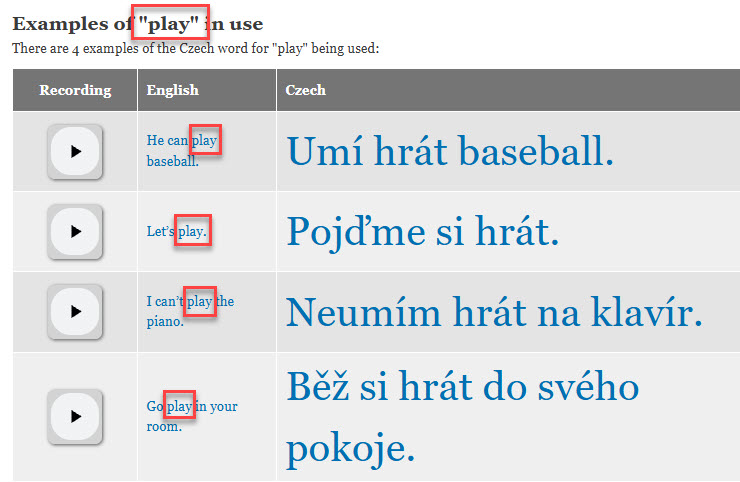
The examples of "play" have only the word "play", not the words "to play", but...many languages use the literal structure "I can to play", "I want to play", "Let's to play", "Go to play", so we need to check further:
Let's investigate an example with ChatGPT and ask it to explain the detail. We use the sentence "He can play baseball", which has just "play" in the English. The goal will be to try and understand the literal breakdown in Czech:
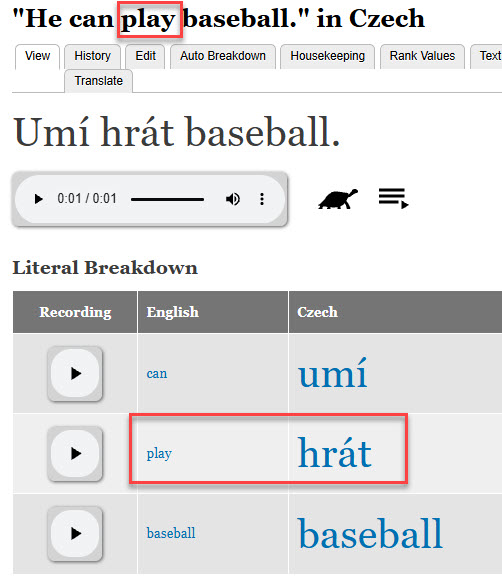
This is the ChatGPT prompt I used:
Explain in English in detail the czech: Umí hrát baseball.
Here is the information regarding the Czech word hrat:
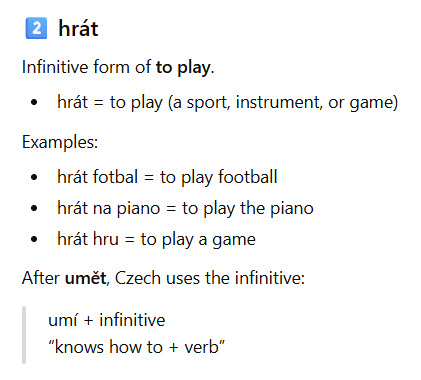
You will see from this that hrat is the infinitive form of the verb to play.
Therefore:
- all of the examples which use hrat meaning "play" need to have their literal breackdown changed to use the entry for hrat meaning "to play"
- when there are no more examples which use hrat meaning "play", then this entry with no examples (here "play") can be deleted
For example, here we see that we have replaced the "play" version of hrat with the "to play" version: